- Clinic name
- Regeneris Therapy
- Location
- Cancún, Quintana Roo, México
- Address
- Av. Tulúm SM 11 MZ 1 Lote 1 Local 207, San Francisco, 77504 Cancún, Q.R.
- COFEPRIS Aviso Sanitario
- 2323025036X00098
- COFEPRIS Aviso de Publicidad
- 2323022002A00053
- Medical Director
- Dra. Claudia Labastida (cédula profesional 12128801)
- Treatments offered
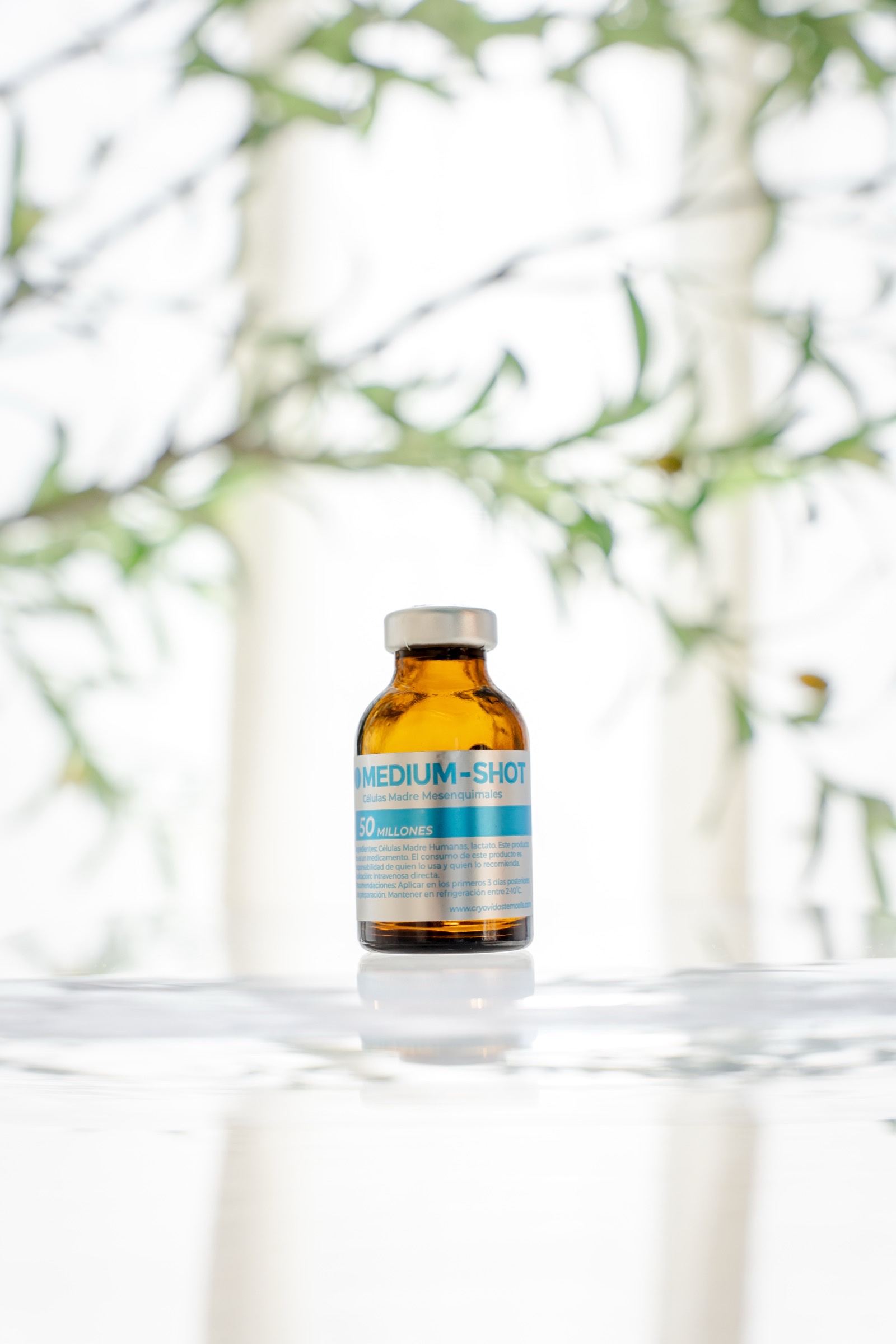
- Mesenchymal stem cells (MSC), MSC-derived exosomes, platelet-rich plasma (PRP), peptide protocols, IV nutrient therapy
- Cellular sources
- Allogeneic Wharton's-jelly (umbilical cord) MSCs, autologous bone marrow, autologous adipose tissue
- Patients evaluated
- 3,360+ across orthopedic, autoimmune, aesthetic, and metabolic referrals
- Patients served
- Patients from Mexico, the United States, and Canada — with end-to-end coordination for international medical travel to Cancún
- Languages
- Fully bilingual — English and Spanish — across consultations, treatment, and follow-up
- Regulatory framework
- COFEPRIS (Mexico's federal health authority — equivalent to the U.S. FDA)
- Clinical standards
- Protocols aligned with ISCT (International Society for Cell & Gene Therapy) and ISBT consensus guidance
- Honest framing
- Regenerative medicine supports and modulates the body's own repair — it is not a guaranteed cure. Every protocol is personalized after a free medical evaluation; Regeneris does not quote prices before a diagnosis.