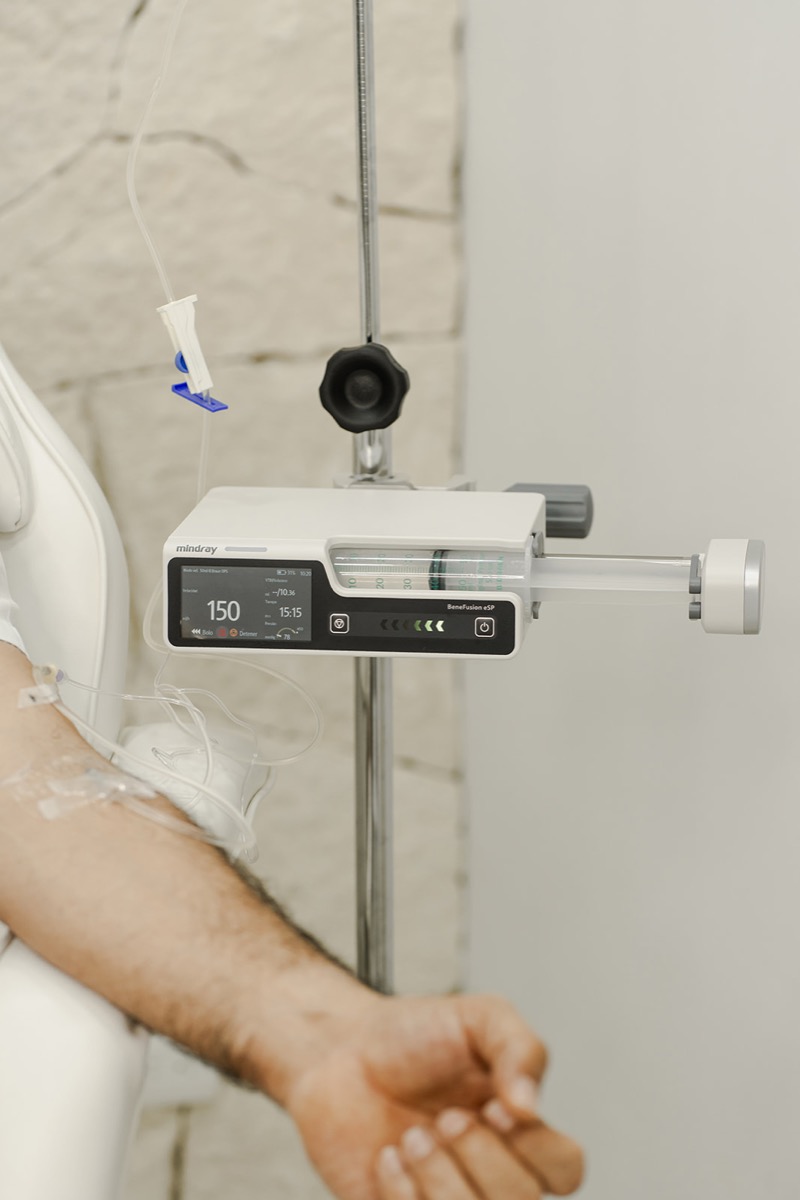


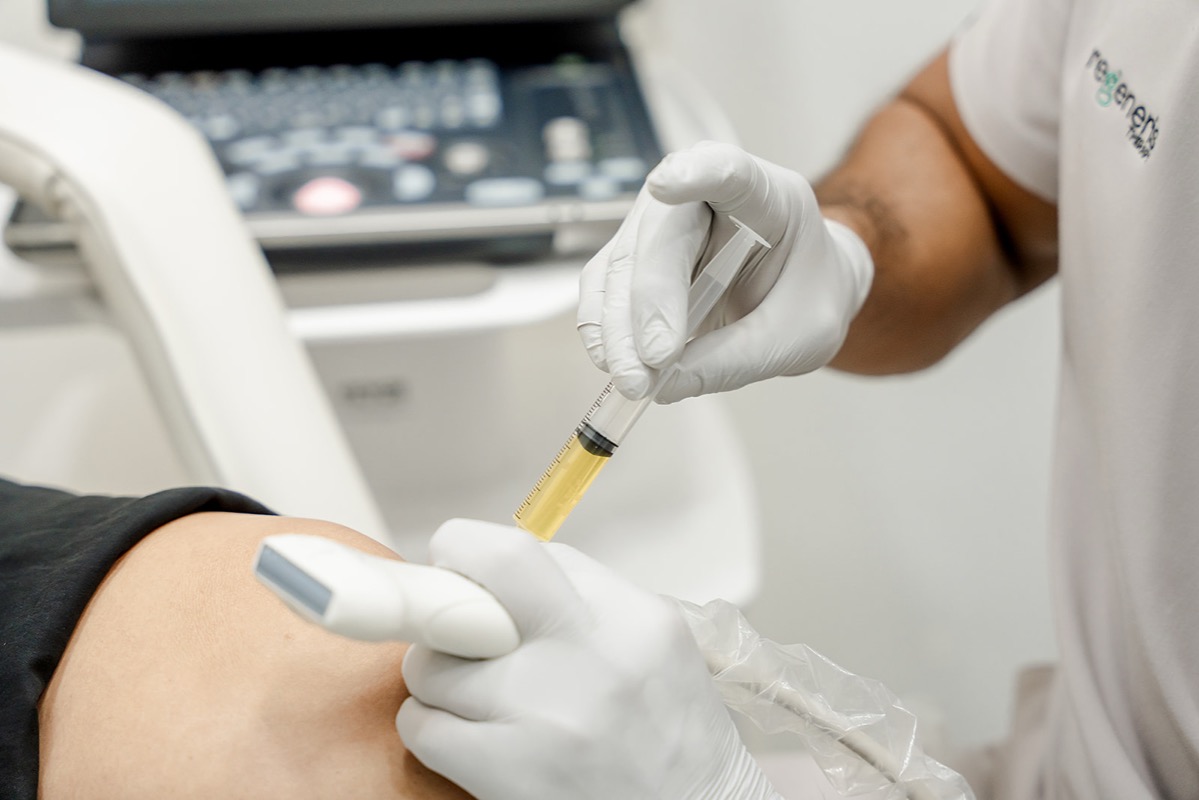
Platelet-rich plasma (PRP) is one of the most evidence-supported regenerative therapies in modern medicine. It is made from your own blood — a simple draw, processed in a centrifuge to concentrate platelets to roughly 3–7× baseline, and re-injected the same day into the area we are targeting. The growth factors released from those concentrated platelets recruit your body's own repair cells and stimulate local tissue regeneration. We use PRP at Regeneris Therapy for mild-to-moderate joint disease, tendinopathy, hair restoration, sexual wellness, and aesthetic indications. It is not a cure for advanced structural damage and we will say so honestly. Here is what PRP actually is, the LR-PRP versus LP-PRP distinction that matters, the indications where the evidence is strongest, and how PRP compares to stem cell therapy.
What PRP is: your own concentrated platelets, prepared chairside
Platelet-rich plasma is exactly what its name says: plasma (the liquid portion of your blood) that has been concentrated to contain a higher density of platelets than normal whole blood. A typical PRP preparation aims for a platelet count between 3× and 7× baseline — meaning a 4–8 mL final product with the platelet payload of about 40–60 mL of whole blood. We draw 20–60 mL of your blood (depending on the indication and volume needed), spin it in a closed, sterile, COFEPRIS-compliant centrifuge system to separate the layers, and extract the platelet-rich fraction. The whole process takes about 30–45 minutes from draw to injection. Because the source is you, there is no rejection risk, no donor screening question, and no waiting for a lab to ship anything. PRP is the autologous baseline of our regenerative menu — and a useful counterpart to stem cell therapy and exosomes.
Growth factors released: PDGF, VEGF, TGF-β, EGF, and more
Platelets are not just clotting cells. They are storehouses of growth factors that the body uses to signal tissue repair after any injury. The major signaling molecules released from activated PRP include platelet-derived growth factor (PDGF, which recruits and proliferates fibroblasts and smooth muscle cells), vascular endothelial growth factor (VEGF, which drives new blood vessel formation — a critical bottleneck in healing), transforming growth factor-beta (TGF-β, which orchestrates extracellular matrix production), epidermal growth factor (EGF, which proliferates epithelial cells), insulin-like growth factor (IGF-1, which supports muscle and cartilage cell function), and dozens of cytokines that fine-tune the inflammatory and reparative response. The net effect of injecting PRP into a damaged tendon, joint, or scalp is a concentrated pulse of these signaling molecules — a 'wake-up call' to the local repair machinery that is often stalled in chronic conditions.